Featured

1968, Vogue, and Cellulite – The complicated history of body fat, women, and social norms.

When looking at the ideological and generational gap between Boomers and Millennial’s we can see huge shifts in what was sought after, especially in women (womxn): The shift in aesthetic from Twiggy to Meg Thee Stallion; the longing for thinness v “thick” (we can have an entirely different conversation about the appropriation of AAVE (thicc), Hip Hop, and Black culture for pop culture consumption), familial ideological shifts, and how we define success. Now, I could write an entire PhD thesis on this topic however, I wanted to highlight 1968, Vogue, and the creation (yes, creation) of the word Cellulite and its entrance into mainstream lexicon. Why? Because it’s 2020 and women are still caught up in the ploy of cellulite.

              First, let’s define what cellulite is: “deposits of subcutaneous fat within fibrous connective tissue (as in the thighs, hips, and buttocks) that give a puckered and dimpled appearance to the skin surface.”  Thank you, Websters Dictionary. Interestingly enough, this word didn’t exist until 1968 and there is no documentation of cellulite as a social phenomenon until then. Taking us back to that blasted year, in April 1968, Vogue became the first English-language periodical to print the term “cellulite,” engendering both a new word and a fashionable new way for American women to hate their bodies. Since we’ve just passed the 52nd anniversary of this massive editorial gaffe, we’re going to have a quick trip down this cursed memory lane to tell the tale of how cellulite came to be the engineered nightmare that it is. And this nightmare, of course, starts in France (Kelsey Miller did an amazing write up of this in Refinery 29 so, I am quoting her work below):

In 1873, doctors Émile Littré and Charles-Philippe Robin included the word “cellulite” in the 12th edition of the Dictionnaire de Médecine. This was the first-known use of the term, according to Professor Rossella Ghigi, whose thesis on the history of cellulite is arguably the most in-depth resource ever written on the subject. The crucial point, however, is that the original (and accurate) definition of cellulite had nothing to do with dimples or fat. Rather, it was a general term applied to cells or tissues in a state of inflammation or infection. It was closely related to cellulitis, a diagnosis still used today (which also has nothing to do with bumpy buttocks), and was primarily used when referring to pelvic infections.

Do you see where I bolded out the text? Do ya? Cause…the OG definition of cellulite has nothing, zero, zilch to do with our twisted connotation of cellulite today. Now, I would LOVE (and I mean L O V E) to delve into the details of how WWII, the military industrial complex, and the shifting dynamics of our nations workforce (ie., women in factories, working outside of the home, etc) all played a role in the change of social (and bodily) norms for women. To save you the dissertation, the culmination of these things led to a shift of what was deemed ‘desirable’ and thus, the days of body fat being tied to prosperity and social standing were gone. In fact, we (I) could argue that the epicenter of lipophobia (fatphobia) was born out of this era.

              So, let’s answer the questions that most women have about cellulite:

  • Why does cellulite seem to be more prevalent in (cis)women then (cis)men?

Well, because it is. Although men experience cellulite much less frequently, at least 10 percent of them have it, too. “Men have fibrous bands that run more parallel with the skin surface,” says Lisa Donofrio, M.D., a board-certified dermatologist and Associate Clinical Professor at the Yale University School of Medicine. “Women have bands that run perpendicular, thus causing the telltale dimpling.”

  • Can you “cure” cellulite?

No.  The prevalence of visible cellulite on a body is entirely up to genetics. Companies that have     marketed their products as a “cure” have been successfully sued.

  1. There is nothing to cure.
  2. Cellulite is not a disease.
  3. There is nothing to cure.
  • Can you reduce the appearance of cellulite?

In some cases, you can reduce the appearance of cellulite by decreasing body fat and increasing your lean body mass (also known as body recomposition). But, like all good things, this is not a quick process and is greatly dependent upon your individual genetic make-up.

To conclude, of all the things in the world that we can (and should) worry about, cellulite is not one of them. Having cellulite just makes your human. It doesn’t make you less worthy of love, of affection, and if someone has something negative to say about how your body shows up in this world…send them my way.

Stay healthy ya’ll,

Your Friendly Neighborhood Soldierfit
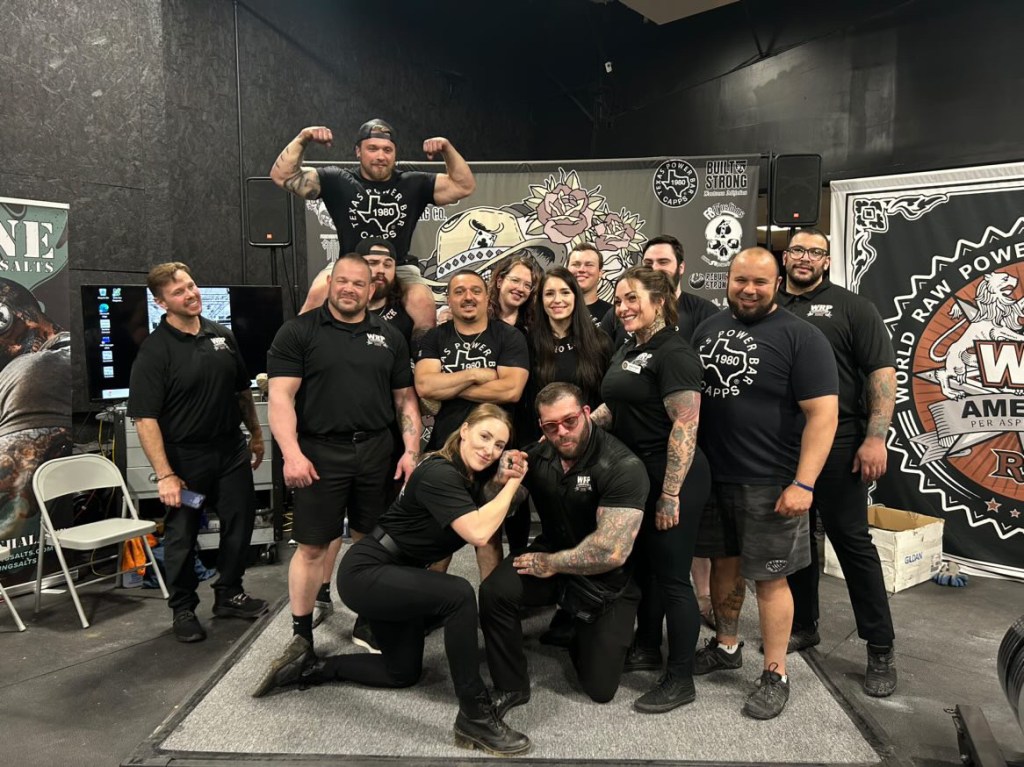
Weekend Recap: All Out for Autism Meet

This weekend I had the privilege of reffing the All Out for Autism meet in Delaware. We raised money for a bang-up cause, watched lifters have the time of their life, and gave back to our sport and community.

Undoubtedly, the crew I ref with (and am blessed to be friends with) is second to none.

I’ve watched Travis and Jess put their money up to host events, give back, get kids equipment and school supplies, and continuously catalyze positive impact for those around them.

Bluntly, they give a fuck. Without abandon.

In a transactionally motivated world, they move with transformational intent.

I will always be inspired by the level of effort, care, and genuine love they bring to this sport, their friendships, and themselves. Truly, I aspire to be able to give back in the same ways they do.

This weekend was about giving back, and while I was working to give back, I walked away with a renewed sense of purpose.

The impact of this weekend will push me to be better in this sport, better for myself, and better at work. If I can catalyze the things I can do, the things I directly control, then I’ll be able to 10x that when giving back.

Getting better isn’t just about you. It will benefit you directly, but the action will trickle down to your family, your friends, and your community. So, if you’re struggling to get going ask yourself: how do you want to show up for those around you?

My answer: vibrantly, tenaciously, and compassionately.

So, for those of you working on yourselves, here’s a journal prompt.

How do you want to show up for yourself?

How do you want to ‘feel’ to those important to you? (ex: I want to feel like sunshine through the window in winter, a spring day (sans the pollen), safe, etc.)

How will you bettering yourself impact those around you?

If you surround yourself with better, you will inherently get better.

#headdownhornsup #jackedandjoyful #soldierfit #powerlifting

Screenshot

Do you understand what it will take to accomplish your goals?

I often see people struggling to reach their goals. They love the sexiness of “I lost 30 lbs” or “I gained 10 lbs of muscle.” But they fail to realize how daunting the journey can be to get there.

You are going to have to sacrifice something. Maybe it’s your excuses, maybe you have to give up TV time in favor of a workout. Maybe you have to drag yourself out of bed at 0400 to accommodate your family’s schedule.

There will always be an excuse that coddles your need for momentary comfort. And it’s not entirely your fault! We are built to desire safety, comfort, and warmth. So, getting up at the ass-crack of dawn to be physically uncomfortable isn’t a great motivator when you’re tucked into bed.

But if you’re not embracing the discomfort of change, you’ll never make it to the other side. You will never become the next version of yourself.

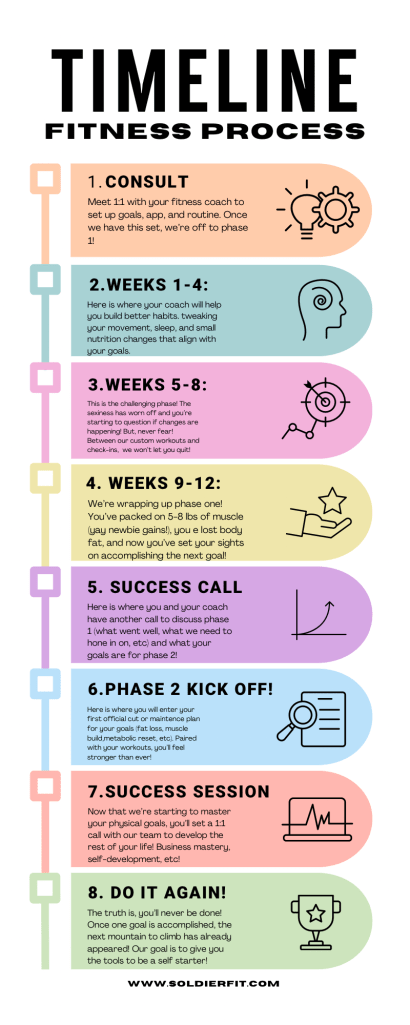
Did you know that it takes our bodies 4-8 weeks to adapt to a new training program? 4-8 weeks! If you’re constantly quitting a program on week 5, you’re never reaching adaptation. You’re constantly stuck in the “this sucks” phase. This is why Danny and I are constantly on our clients about the importance of progress pictures. Sure, the scale might not move, but I promise you the body composition is starting to shift!

What most people fail to realize is the importance of understanding your phase. If you don’t know about phasing, comment below, and I’ll jump on a call with you to help you build out your fitness goals for free!

If you’re unfamiliar with phasing, I built the graphic below to help you understand the process!

#headdownhornsup#HDHU

Creatine: 3 Key Benefits Backed by Science

In the realm of fitness and performance supplementation, few substances have garnered as much attention and acclaim as creatine. Widely celebrated for its ability to enhance physical performance, boost muscle strength, and aid in recovery, creatine has become a staple in the regimens of athletes and fitness enthusiasts alike. But what exactly makes creatine so effective, and how can it benefit your training routine? Let’s delve into the science behind this powerhouse supplement and explore three key benefits that make it a game-changer for anyone striving to maximize their fitness potential.

  1. Increased Muscle Strength and Power: At the heart of creatine’s prowess lies its remarkable ability to augment muscle strength and power. Numerous studies have demonstrated that creatine supplementation can significantly enhance performance during short bursts of intense activity, such as weightlifting and sprinting. How does it work? Creatine functions as a readily available source of energy by replenishing phosphocreatine stores in muscle cells. This allows for rapid regeneration of adenosine triphosphate (ATP), the primary energy currency of cells, leading to improved muscle function and explosive power output. So, whether you’re striving to set a new personal best in the gym or sprint across the finish line faster than ever before, creatine can provide the extra edge you need to push your limits and achieve your goals.
  2. Enhanced Exercise Performance: Beyond its role in boosting raw strength and power, creatine has also been shown to enhance overall exercise performance across a spectrum of activities. Whether you’re engaging in resistance training, high-intensity interval workouts, or endurance exercise, creatine supplementation can help you go the distance and maximize your workout potential. By delaying the onset of fatigue and improving muscular endurance, creatine enables you to maintain higher levels of intensity for longer durations, ultimately leading to more productive and impactful training sessions. Whether you’re grinding out one last rep or sprinting towards the finish line, creatine empowers you to push past your limits and unlock your true potential.
  3. Muscle Growth and Recovery: In addition to its performance-enhancing effects, creatine also plays a crucial role in promoting muscle growth and facilitating post-exercise recovery. By increasing cellular hydration and stimulating protein synthesis within muscle cells, creatine creates an optimal environment for muscle hypertrophy and repair. Furthermore, creatine has been shown to reduce markers of muscle damage and inflammation following intense exercise, thereby expediting the recovery process and minimizing downtime between workouts. Whether you’re striving to build lean muscle mass or accelerate your recovery after a grueling training session, creatine provides the support your body needs to repair, rebuild, and thrive.

In summary, creatine stands as a formidable ally in the pursuit of peak physical performance and fitness excellence. With its ability to enhance muscle strength, power, exercise performance, and recovery, creatine offers a multifaceted approach to optimizing your training regimen and achieving your goals. Whether you’re a seasoned athlete or a fitness enthusiast looking to take your workouts to the next level, creatine holds the potential to unlock new levels of strength, endurance, and muscular development. By harnessing the power of creatine, you can unleash your full potential and embark on a journey toward greater fitness, vitality, and overall well-being.

“BUT LAUREN, WHAT ABOUT BLOATING?!” Don’t worry, I saw this question coming and have it all segwayed out for you below:

Bloating is a common concern associated with creatine supplementation. While creatine itself does not directly cause bloating, several factors may contribute to this sensation in some individuals:

  1. Water Retention: One of the primary mechanisms through which creatine exerts its effects is by increasing intracellular water retention in muscle cells. This cellular hydration is beneficial for muscle function, performance, and growth. However, some individuals may experience mild bloating or water retention as a result of creatine supplementation. This is typically temporary and tends to subside once the body adjusts to the increased water intake.
  2. Improper Hydration: Adequate hydration is essential when supplementing with creatine. Creatine draws water into muscle cells, so it’s important to drink plenty of water throughout the day to support this process and prevent dehydration. Failure to maintain proper hydration levels may exacerbate bloating or discomfort associated with creatine supplementation.
  3. Dosage and Timing: In some cases, bloating may occur if creatine is consumed in excessive amounts or if it’s not properly divided into smaller doses throughout the day. Additionally, taking creatine on an empty stomach or combining it with certain foods or supplements may exacerbate gastrointestinal discomfort in sensitive individuals. Personally, I prefer to take my creatine while I’m training. I would not recommend that you use it before bed.
  4. Individual Sensitivity: Like with any supplement, individual responses to creatine can vary. While many people tolerate creatine supplementation well with minimal side effects, others may be more sensitive to its effects and experience bloating or gastrointestinal discomfort. Factors such as genetics, diet, and overall digestive health can influence individual responses to creatine supplementation.

To minimize the risk of bloating or discomfort while taking creatine, consider the following tips:

  • Start with a lower dosage: Begin with a conservative dosage of creatine (e.g., 3-5 grams per day) and gradually increase as needed while monitoring your body’s response.
  • Stay hydrated: Drink plenty of water throughout the day, especially when supplementing with creatine, to support proper hydration and minimize bloating. Plenty of water means we’re drinking 100-120oz a day, for my cactus people.
  • Take with meals: Consuming creatine with meals may help reduce the risk of gastrointestinal discomfort for some individuals.
  • Consider alternative forms: If bloating persists despite these measures, you may want to try alternative forms of creatine, such as micronized creatine monohydrate, which may be better tolerated by some individuals.

Ultimately, while bloating can occur in some individuals when supplementing with creatine, it’s typically mild and temporary. By following proper dosage recommendations, staying hydrated, and being mindful of individual sensitivity, you can minimize the risk of bloating and enjoy the performance-enhancing benefits of creatine supplementation.

Recommendations:

  • Start with creatine monohydrate – this is the most studied and most used form of creatine.
  • Start with 3-5 grams on training days.
  • Drink your creatine before or during training.
  • Drink at least 80 oz of water before creatine consumption.

Can’t wait to see you all shine with my favorite supplement ever!

LP

Fitness is a Skill

 As someone who has spent a chunk of their adult life traversing life-changing injuries, I quickly realized that the guise of “getting there” was, and is, bullshit. The goals that I held gently in my 20s, gave way to goals that were tenaciously tended to in my 30s, but the difference between the successes and failures were the skills I had available to wield. Contrary to the thoughts of my younger self, I did not fail because I was inept, unable, or unwilling to do what it takes. Ultimately, the difference between your goals being seen through to completion or not will come down to the skills you have in your tool belt.
 When faced with initial failure, the amateur will often look at said failure as a moral indictment that they are incompetent, inept, unable. Failure in this life is a guarantee. You’re going to face the shadowy dream reaper more times than you will bask in the sun of success. So, instead of berating yourself when the inevitable signs of failures show up, I would challenge you to change your perspective. Instead of “I failed” can you ask, “where can I improve?”
 I’ve mulled over how the intersection of technology and instant gratification have eroded our ability to be curious, patient, and introspective. In a day and age where things are so easy to come by, I challenge you to get curious about yourself and your goals. WHY do you want to accomplish x, y, or z? What skills are you lacking? What discipline have you let wither away? How often do you attempt x only to stall out at the first sign of difficulty? Curiosity and skill development are the bricks and cement mix that you’ll use to build your path to whatever the goal is: improving your fitness, getting the promotion at work, or being a better spouse/partner. Getting curious about your goals will allow you to see them as puzzle pieces, as opposed to the guillotine that pulls the shroud around you.
 Fitness is no different. Few people understand that their journey is going to be a marathon of skill building, daily dedication, and life-long habit changes. As daunting as that may be, this is simply the daily act of skill-building gaining interest throughout the duration of our lives. And bluntly, the time is going to pass regardless so why the hell not.
 Wanting to improve your fitness lots you with about 99% of the population. You’re in good company. So, stow the shame and let’s get to work. Start by addressing the small skills we have and add to our repertoire of success. Can we add a vegetable to each meal? How about adding in two twenty-minute walks a day? What if we parked a smidge farther from the office so we get in extra steps each day? Can we drink 30 oz of water BEFORE we guzzle down the life-giving essence that is coffee? Once you’ve mastered the small, but impactful, basics you can then take those skills to level two!
 For each additional level we climb to, the skills we’ve learned previously will be tested and sharpened. Mastery of skills is something that requires us to be curious about ourselves and when and where we fail. For the love of all you hold dear, stop viewing failure as you not being worth it good enough or able. It is okay to riot against the self-perceived failures we slam into. The walls of our ego will keep us caged, and stagnant, from our growth objective. Whether you look at tending to your ego as pulling weeds from a garden, slaying the internal dragon who hordes your emotional growth as its own, or a wound that needs tending to it all comes down to being able to be honest with yourself, where you’re at, and where you want to go.
 Whatever your goals are, they are worth it. Those goals, and the highest version of yourself, are worth fighting for. In my 20s, the goal was simply to not be frail, scared, and stuck. I needed to feel powerful, self-assured, and confident that the assaults I faced would never again be met with the lack of skill I had then. In my 30s, my journey required me to weave strength (both physical and emotional), emotional intelligence (hello, therapy), and hope for the future into the tapestry of my now. I find myself asking: “Does what I am doing now align with the highest version of myself?” Does this align with the person I want to be? Does what I am currently doing allow me to one day be the partner, and if I’m lucky enough a parent, that I would be proud to be? If not, guess what? I’m not fucking proceeding with that route! If you find yourself on a path that doesn’t align with what you want, simply get off the path. You do have the ability to change lanes.
 Fitness is a skill. Building dedication is a skill. Becoming whatever, you want to be, is going to require the sacrifice of your current habits, for better ones. So, my friend, ask yourself: what habits do I currently have that help me grow? Which habits need tending to, so I stop tripping myself up? Once you’ve answered those questions, you now have a place to begin. Everyone has something they’re working on, no one has it 100% together. So, stop feigning after the Instagramable lives of people you do not know and start tending your own garden. You are fully, and robustly, capable of changing your situation. You just have to work on the problem and ask the right questions.

See you on the other side,
Your Friendly Neighborhood Soldierfit

The Power of Reverse Dieting: A Path Forward

Embarking on a fitness journey often involves stringent diets aimed at weight loss or specific body composition goals. While KETO, Paleo, and IF are mainstream there is a lesser-ish-known approach called reverse dieting. Reverse dieting challenges conventional dieting norms by emphasizing gradual caloric increases after a period of restriction. Keep in mind, I’m writing this article in layman’s terms so everyone can understand the principles we’re discussing. No talk of Kreb-cycles here!

Understanding Reverse Dieting

Reverse dieting involves a strategic and gradual increase in daily caloric intake following a period of calorie restriction or dieting. The primary goal is to boost metabolism, restore hormonal balance, and prevent excessive weight regain once a restrictive diet phase ends. IE, we’re gonna gain muscle, limit fat increases, and climb our way back to a caloric range that doesn’t make us miserable.

The Mechanics Behind Reverse Dieting

During a period of calorie restriction, the body adapts by slowing down its metabolic rate to conserve energy. While this adaptation can aid in weight loss initially, it often leads to plateaus and makes further fat loss challenging. If you’re someone who’s starting their diet at 1200 or 1500 calories a day…you’re gonna run out of your diet runway quick! Reverse dieting works by gradually reintroducing calories to support your metabolism, allowing the body to adjust to higher energy intake and limiting immediate fat gain.

Benefits of Reverse Dieting

  1. Metabolic Revival: After a prolonged calorie deficit, metabolic rate drops. Reverse dieting helps revitalize metabolism, preventing the metabolic slowdown that commonly occurs during and after weight loss. You are not meant to eat 1200 calories a day. You are cranky, irritable, and not making progress because you refuse to eat more! Eating more, or reverse dieting, will allow you to make progress, be pleasant to be around, AND will limit injuries!
  2. Hormonal Restoration: Caloric deficits can disrupt hormones crucial for metabolism and overall health when done for too long. Reverse dieting supports hormone balance, especially leptin (which regulates appetite and metabolism) and thyroid hormones.
  3. Sustainable Weight Management: By slowly increasing calories, reverse dieting establishes a more sustainable approach to weight maintenance, preventing rapid weight regain often experienced after restrictive diets. You know that terrible period of yo-yo dieting? The one where you ate sun 1,000 calls a day for 3 weeks, lost 10lbs, then gained 15 back the moment you ate like a human? Yeah that’s because you didn’t have a sustainable diet practice set. Reverse dieting out of a long history of dieting will allow you to ditch the yo-yo and actually enjoy life.
  4. Improved Relationship with Food: It fosters a healthier relationship with food by transitioning from a mindset of restriction to one focused on nourishment and fueling the body appropriately. FOOD IS NOT THE ENEMY.

How to Implement Reverse Dieting

  1. Calculate Maintenance Calories: Determine your maintenance calorie intake – the number of calories needed to maintain your current weight. Online calculators or professional guidance (hi, me or my team) can help you establish this.
  2. Incremental Increase: Gradually increase daily caloric intake by 50-100 calories every 1-2 weeks. Monitor progress by observing changes in weight, energy levels, and overall well-being. Protip: If your weight hasn’t changed, stay where you’re at. If you lose weight, add calories.
  3. Prioritize Nutrient-Dense Foods: Focus on whole, nutrient-dense foods to support overall health while increasing calories. Emphasize lean proteins, complex carbohydrates, healthy fats, and plenty of fruits and vegetables.
  4. Monitor and Adjust: Continuously assess progress and make adjustments as needed. Not everyone responds the same way, so personalized adjustments are essential.

Final Thoughts

Reverse dieting is a promising approach in the realm of health and fitness. It promotes a balanced, sustainable lifestyle by prioritizing metabolic health and overall well-being over rapid weight loss. Remember, it is crucial to approach any dietary changes mindfully, seeking advice from qualified professionals to ensure it aligns with individual needs and goals.

Embrace the journey of nourishing your body, and consider reverse dieting as a potential tool in achieving sustainable health and fitness goals.

See you next time,

Your Friendly Neighborhood Soldierfit

So, You Fell Off Track

If you’re reading this, you’re likely aggravated about your current situation. Maybe you’ve fallen off of your fitness routine, maybe you’ve once again lost sight of the goals you wanted to accomplish, or maybe you find yourself sinking deeper into the pit of despair (5 points if you get this reference) with no hope of rescue.

If I may interrupt your lovely wallow in self-pity, no one is coming to save you. Harsh? Yes. Aggravating? Yes. But, at the end of the day, you are your own knight in shining armor. Your path to victory, your jaunt through the Floran/Guilder Fire Swamp, requires you to navigate your trials and tribulations… AND WIN!

So, as you lay there, sinking deeper into emotional quicksand let me ask you: Are you tired of being overcome with (insert emotion here)? Are you willing to deal with the discomfort of change to escape your current situation?

You are perfectly capable of righting your capsized boat. You can get back on track. Sure, it may require a “come to your *insert deity here*” moment and planning, but you can do it!

If you need a little guidance, here are some easy ways to get on track:

  • Talk to your support group about how you’re feeling and what you need.
  • Set a plan for your week. Which days are you training, studying, etc.? What times of day are you doing each? If you don’t know how to time block your calendar, it’s worth the time it takes to google it.
  • Set minimums for each thing you wish to tackle. (I will go to the gym 3x/week, I will drink 100 oz of water 5x/week, etc.)
  • Don’t wait. If you can do something now (going on a walk, getting off the couch, adding veggies to the plate, etc.) do it! Action is always going to be beneficial.

If your goals are fitness based here are some specific things to do:

  • Set a water minimum each day. Start drinking water the moment you get up to get in the habit of reaching for it!
  • Set a minimum number of steps each day! If you’re far off, make sure you’re getting 20-minutes of walking in 3x a day to make the goal more attainable!
  • Get movement in 3x/week. Whatever it is, commit to 3!
  • Have grace with yourself when things go off plan. We operate in a rule of thirds! 1/3 of the time, things will be great. 1/3 of the time, things will just be okay, and the last 1/3 is going to be straight garbage. If that ratio stays intact, guess what! You’re right on track!

If you need additional help, be sure to email: lparrinello@soldierfit.com so she can help build you a game plan that works for you!

Sending you all the things you need in this holiday season,

Your Friendly Neighborhood Soldierfit

Just Start.

We’re in the season of “I’ll wait till New Year’s.” But, why? Why do we need a pre-determined date to get moving in a new way? What is the difference, the real difference, in getting started 6 weeks from now vs today? Maybe a better question is: what is the cost of starting in 6 weeks or starting now?

In 6 weeks, you could be well on your way to accomplishing your goals. Your habits will have shifted in small, but impactful ways. Your routine may include more water, more sunlight, more steps, and less screen time. Your inner monologue may be more positive, you may find yourself congratulating yourself on adding more food to your plate, making movement a priority, and being gracious to yourself when the inevitable hiccups arise. Sure, in those 6 weeks, you will have added some muscle, you will have lost some body fat, and you know what you won’t have lost? Time with family. Meaningful and delicious meals that elevate the holiday season to the decadent time that it is. Maybe, after YEARS of dredging yourself over hot coals for daring to enjoy a sweet treat, you see it as a delicious way to fuel your body.

But if you wait 6 weeks, you won’t learn how to apply those SKILLS to the holiday season. Learning how to eat properly (and deliciously) is a skill. Learning how to extend grace as you’re learning a new skill is a skill. Notice I said nothing about eating less.

There is a magical, science-based, way to get everything you want.

Just start. You must give yourself permission to struggle while doing something new. And you must be consistent. If you can do those things in small daily increments. One year from now, your life will look drastically different. So, my dear reader, is it day one? Or, one day? Which path are you taking? Which adventure do you choose to go on?

Signed,

Your Friendly Neighborhood Soldierfit

1968, Vogue, and Cellulite – The complicated history of body fat, women, and social norms.

              When looking at the ideological and generational gap between Boomers and Millennial’s we can see huge shifts in what was sought after, especially in women (womxn): The shift in aesthetic from Twiggy to Meg Thee Stallion; the longing for thinness v “thick” (we can have an entirely different conversation about the appropriation of AAVE (thicc), Hip Hop, and Black culture for pop culture consumption), familial ideological shifts, and how we define success. Now, I could write an entire PhD thesis on this topic however, I wanted to highlight 1968, Vogue, and the creation (yes, creation) of the word Cellulite and its entrance into mainstream lexicon. Why? Because it’s 2020 and women are still caught up in the ploy of cellulite.

              First, let’s define what cellulite is: “deposits of subcutaneous fat within fibrous connective tissue (as in the thighs, hips, and buttocks) that give a puckered and dimpled appearance to the skin surface.”  Thank you, Websters Dictionary. Interestingly enough, this word didn’t exist until 1968 and there is no documentation of cellulite as a social phenomenon until then. Taking us back to that blasted year, in April 1968, Vogue became the first English-language periodical to print the term “cellulite,” engendering both a new word and a fashionable new way for American women to hate their bodies. Since we’ve just passed the 52nd anniversary of this massive editorial gaffe, we’re going to have a quick trip down this cursed memory lane to tell the tale of how cellulite came to be the engineered nightmare that it is. And this nightmare, of course, starts in France (Kelsey Miller did an amazing write up of this in Refinery 29 so, I am quoting her work below):

In 1873, doctors Émile Littré and Charles-Philippe Robin included the word “cellulite” in the 12th edition of the Dictionnaire de Médecine. This was the first-known use of the term, according to Professor Rossella Ghigi, whose thesis on the history of cellulite is arguably the most in-depth resource ever written on the subject. The crucial point, however, is that the original (and accurate) definition of cellulite had nothing to do with dimples or fat. Rather, it was a general term applied to cells or tissues in a state of inflammation or infection. It was closely related to cellulitis, a diagnosis still used today (which also has nothing to do with bumpy buttocks), and was primarily used when referring to pelvic infections.

Do you see where I bolded out the text? Do ya? Cause…the OG definition of cellulite has nothing, zero, zilch to do with our twisted connotation of cellulite today. Now, I would LOVE (and I mean L O V E) to delve into the details of how WWII, the military industrial complex, and the shifting dynamics of our nations workforce (ie., women in factories, working outside of the home, etc) all played a role in the change of social (and bodily) norms for women. To save you the dissertation, the culmination of these things led to a shift of what was deemed ‘desirable’ and thus, the days of body fat being tied to prosperity and social standing were gone. In fact, we (I) could argue that the epicenter of lipophobia (fatphobia) was born out of this era.

              So, let’s answer the questions that most women have about cellulite:

  • Why does cellulite seem to be more prevalent in (cis)women then (cis)men?

Well, because it is. Although men experience cellulite much less frequently, at least 10 percent of them have it, too. “Men have fibrous bands that run more parallel with the skin surface,” says Lisa Donofrio, M.D., a board-certified dermatologist and Associate Clinical Professor at the Yale University School of Medicine. “Women have bands that run perpendicular, thus causing the telltale dimpling.”

  • Can you “cure” cellulite?

No.  The prevalence of visible cellulite on a body is entirely up to genetics. Companies that have     marketed their products as a “cure” have been successfully sued.

  1. There is nothing to cure.
  2. Cellulite is not a disease.
  3. There is nothing to cure.
  • Can you reduce the appearance of cellulite?

In some cases, you can reduce the appearance of cellulite buy decreasing body fat and increasing your lean body mass (also known as body recomposition). But, like all good things, this is not a quick process and is greatly dependent upon your individual genetic make-up.

To conclude, of all the things in the world that we can (and should) worry about, cellulite is not one of them. Having cellulite just makes your human. It doesn’t make you less worthy of love, of affection, and if someone has something negative to say about how your body shows up in this world…send them my way.

Stay healthy ya’ll,

Your Friendly Neighborhood Soldierfit
Through the Looking Glass: A Piece for My Challenge Peeps

How often have we sat with our disrespectful thoughts or internal monologue? How often have we let eerie thoughts linger around us like unwanted mosquitos, sucking away at our joy or contentment? Why do we sit with this? Sure, emotional, and mental mosquito repellent doesn’t really exist, but we could choose to not venture into the swampy, mosquito filled, places that encroach on our subconscious minds…and yet, we still do. For my challenge peeps, maybe your day started by vehemently stating “I’m not making any progress!” Disregarding the fact that you have lost some weight in the first few weeks of your new venture but, “it’s not enough.” As you continue to spiral into the depths of despair and annoyance, this, Alice, is where we should have avoided that rabbit hole all together. We shouldn’t have let ourselves slip into the negative Ted-Talk that you just spent 45 minutes giving yourself.

Now, everyone I know, even outside of the challenge, struggles with standing in their own way, or self-deprecation, in one form or the other.  internally we deal ourselves crushing blows by the constant rain of beratement, self-deprecation, and self-sabotage.

Whether we are pursuing our goals athletically, financially, interpersonally etc. we need to have a “come to your deity moment” where we really ask ourselves, why do we stand in our own way? Why do we follow the white rabbit of self-deprecation down the burrow? Do we want to stand in our own way? Or, is it simply easier to slip back into poorly grown habits rather than stand up for ourselves, to ourselves?  Were we taught to put ourselves last (the noble lie told by many), in order to take care of those more deserving?

Which part of that resonated with you? If something did, sit with that. Let the reasoning resonate with you for a moment. Do you have an idea of how to stop yourself? Can you champion your own cause instead of flinging yourself into the fire swamp and giving yourself iocane powder for punishment (10 points if you get the reference)? Why is it that when we struggle, as adults, we rip into a litany of internal verbal abuse? We would never speak that way to a child. We certainly wouldn’t allow someone to verbally abuse a child in front of us, so why do we tolerate it for ourselves? When you find yourself in your darkest moments, can you figure out what drives you to that borrow of despair? Can you stop yourself from following the rabbit?

Well, do you have your answer? From there, can you starve your fears?

The next time you find yourself spinning out of control, falling into the mental trap that is our subconscious, try to remind yourself what counters your fears. Where are your strengths? Where do you feel empowered and vibrant? Filled with flame, salt, and seawater? Where do you slay dragons? What personality traits double as weapons of safety and malice? Of self-worth and love?

Whatever you are currently mulling over I hope you know you are so much more than your fears. Your worth is 10 billion times that of your biggest short coming, your biggest fears, your biggest obstacle.

So, Alice, before you jump down that rabbit hole. Remember that Dinah had the common sense to not follow the rabbit. Dinah played in the sun. Dinah lingered in the light; Alice played in shadow. While both are fine, both have a time and place. In moments of hardship, I have drawn from the dark remnants of my past to hurdle me through the swamps that were slowing me down (mental or physical) or battle the RUS’s (again 10 points if you get this) that sit in the shadows of our minds, feeding off fear and trepidation. But in the moments where contentment lives, where neither hardship nor elation can reach, it is the happier moments, the moments where our internal warrior (or Alice) can sit beneath a tree and sleep, that will lend us comfort. As we journey towards a healthier version of ourselves (mentally as well), it is important to identify which thoughts, habits, or monologues, will lead to us tumbling down the rabbit hole or allow us to stay on the path to our goals.

Think about that the next time you’re teetering on knifes edge: will you follow the rabbit? Or, will you avoid the mental traps that you know will greet you just below?

In love, honey, and salt,

LP

Stop Blocking Your Blessings

In all honesty, I was not expecting the response I got to my last piece. In fact, I honestly expected it to float under the radar and then sit in the purgatory that is my blog site. Dusty and unread.

But after the overwhelming response to the last article, I found myself contemplating all the times I’ve stood in my own way, and subsequently asked myself: “how many times have I blocked my own blessings?” Was it due to fear or due to “someone else already doing this?” A few years ago, I had the chance to have a call with someone I admire greatly and something she said stuck with me (and while I will paraphrase this badly, it went something like: “It doesn’t matter if there are 10,000 people doing the same thing you are. People who align with your values, or see themselves in you, will always work with you. There are thousands of people doing what I do, yet here I am. And here you are.” – Neghar Fooni.

I have pushed back at many things over the course of my time at Soldierfit. I pushed back against The Workout Wednesday videos, I pushed back against the podcast, I pushed back about this blog, etc etc etc. I’ve pushed back so many times I’m surprised (and grateful) that Danny continues to push ideas my way. Now, I am a fantastic creator for other people. You give me an idea and I will build it out down to the final detail. If Field of Dreams was ever watched in your house, I am the embodiment of “I will build it.” The issue is, I don’t put forth the same energy into my own goals or aspirations.

Why?

Well, who would want to listen to me? I’m a 28-year-old kid. What can I say that hasn’t already been said, what can I teach that hasn’t already been taught? But inspite of that internal quip, I’ve realized over the last few days (with months of build up) that maybe it doesn’t matter. The biggest disservice I can do for others, is not show up for myself.

Right now, I am overwhelmed with immense gratitude. As in, “my stomach hurts and I’ve cried twice already and it’s only 10:30 am, damn it.”

Why?  

This morning (while folding shirts and knocking out my Arabic drills like the nerd that I am) a member approached me and said, “you know, your writing is a blessing.” And I was in such shock I didn’t know what to say. Something I almost didn’t post had THAT kind of impact? The response to my little blog all but knocked me on my ass, but that? A blessing?! I choked back tears as they walked away and was left reconciling the memories of the morning, I turned 26 and how I wanted nothing more than to end everything. I did not feel purposeful, who was I helping? Was I just taking up space? Recklessly taking up the oxygen that someone more ‘productive’ could use? That abyss and I have an intimate relationship, and the only reason it didn’t swallow me whole when I broke my back was because I was too hardheaded to fall in.

And then this morning, someone took the time to tell me they admired my work, my writing, my voice, and they thought it was “a blessing.” Now, that may not resonate with all of you but, I grew up in a Mormon and Catholic household. My Grandfather is a Mormon Bishop. While I, jokingly, call myself a heathen because my faith and I have always been at odds. I grew up in church, in faith. Someone calling me, or my work, a blessing, is about as affirming as it can get to me. The reality is, 9 times out of 10 I discount the things I do, and I’m sure you do too, because “everyone would do this.” I do not see anything that I do as special, it’s just my personality to want to help and fill in the cracks in foundations, education, etc. I figure that if I want to do it everyone must, right?

But I, the unyielding optimist, cannot fathom my actions being anything but small nudges to gently push people along their journey. What I do can’t be that different from other people, right?

I never expected these quick little videos or my blog to mean anything. To be honest, when Danny told me to start writing I didn’t know why he wanted me to. Some days I still don’t. But on a morning that is laced with snow, a kind compliment, and me diving into my own thoughts, I hope you all reconcile the fact that you are needed, your voice is needed, your actions matter and have impact, and that maybe we aren’t where we want to be because we are standing in our own way.

Maybe, you need to stop blocking your blessings.

With love, salt, and honey,

LP

Design a site like this with WordPress.com
Get started